
Courses
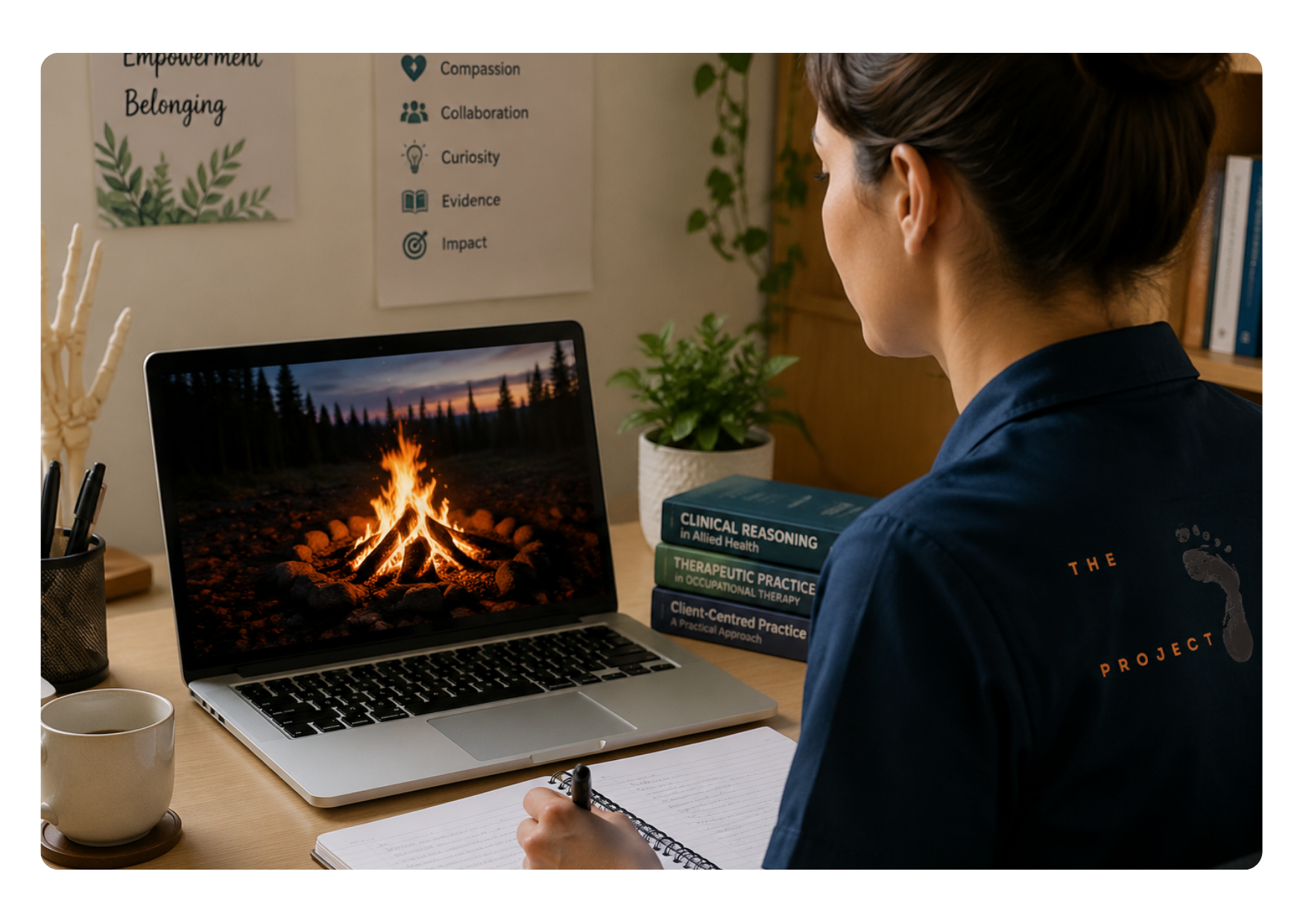
Our courses help you consolidate a framework.
They help you organise what you already know, evaluate new health trends with confidence, and translate ancestral health principles into practical conversations with patients.
Built around this simple idea:
Modern humans are living in environments that often conflict with the conditions our bodies were shaped for.
When we understand that mismatch,
We can begin to ask better clinical questions.
What signals is the patient’s biology adapting to?
What environmental inputs are missing, excessive, or distorted?
And how can we help restore the conditions that support healthy human function?
These courses are designed to help practitioners think more clearly, communicate more effectively, and apply ancestral health principles in a practical clinical setting.
The Human Rehabilitation Project - A Framework.
Built around a framework, not a random library of lectures.
Designed for clinical translation, with patient-facing PDFs.
Clear course structure, clear pricing, clear outcomes.
Relevant in modern health conversations.
Short practical lessons that fit around clinical life.
Take home challenges to help you apply the concepts in real life. Tomorrow.
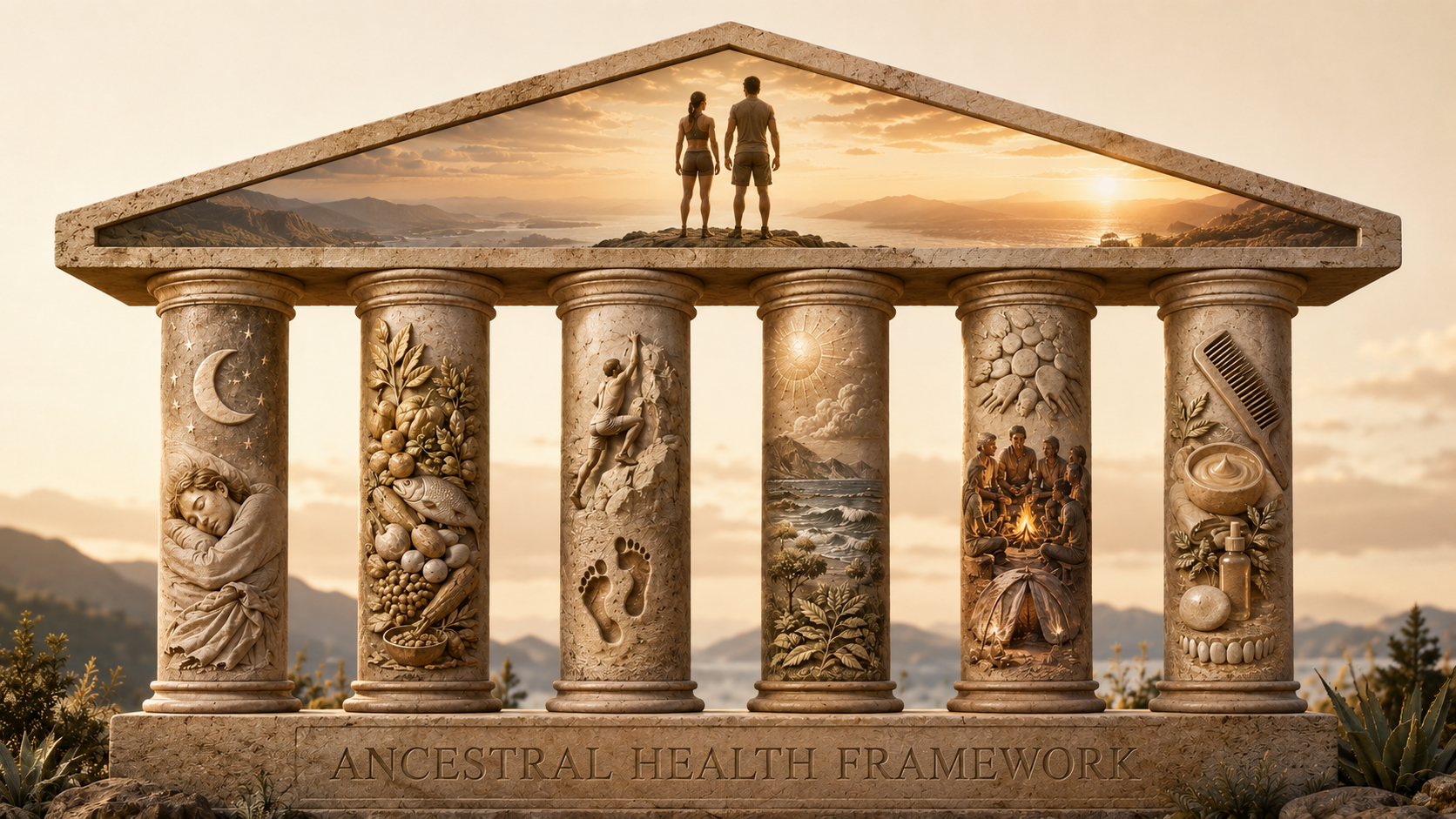
Organised around the major environmental signals that shape human health, adaptation and resilience.
Movement.
Sleep.
Nutrition.
Environmental exposure.
Mind and tribe.
Grooming and hygiene.
Each module contains several units and explores one part of the Ancestral Health framework
Translated into practical clinical reasoning for modern health professionals.
This is not another protocol.
It is a way to understand why humans struggle in modern environments — and how practitioners can begin to restore the conditions that support healthy function.

Featured Course
Human Movement and Biomechanics, Through an Ancestral Health Lens
View our featured course:
Module 1: The Movement Module.
Human Movement and Biomechanics, Through an Ancestral Health Lens
A professional development course for practitioners who want a clearer framework for understanding modern musculoskeletal deconditioning, movement environments, feet, footwear, posture, and sleep surfaces.
The Movement Module explores how human movement is shaped by the environments we live in every day. It looks at the modern mismatch between the body we inherited and the chairs, shoes, beds, floors, screens, cars, and movement patterns we now adapt to.
Inside this module, practitioners will explore:
The fundamentals of ancestral health, adaptation, hormesis, and mechanotransduction
Feet, shoes, barefooting, and foot rehabilitation
Pillows, mattresses, and sleep surfaces
Posture, movement environments, and modern deconditioning
Units can be accessed individually, or together as the complete Movement Module.

Future Courses
The Human Rehabilitation Project course library is being built around the six pillars of the Ancestral Health framework.
The Six Pillars of Human Health
One framework
Each pillar explores one of the major environmental inputs that shape human health, resilience and adaptation.
Movement
Explores how the human body is shaped by the way we move — or fail to move — in daily life. This pillar looks beyond exercise and examines feet, footwear, posture, floor-sitting, load, terrain, gait and the physical environments that condition the body.
Sleep
Examines sleep as a biological repair process shaped by light, darkness, temperature, safety and rhythm. This pillar explores how modern environments disrupt sleep and how practitioners can help patients restore deeper, more natural patterns of recovery.
Nutrition
Looks at nutrition through the lens of human biology, food environments and evolutionary mismatch. Rather than promoting one rigid diet, this pillar helps practitioners evaluate food quality, metabolic resilience, satiety, nutrient density and modern dietary disruption.
Exposure to Nature
Explores the importance of regular exposure to natural environmental signals — including sunlight, fresh air, heat, cold, wind, water, earth and seasonal variation. This pillar reframes the outdoors as an essential part of human regulation, resilience and wellbeing.
Mind and Tribe
Examines the role of social connection, belonging, meaningful work, story, ritual and psychological safety in human health. This pillar explores how isolation, chronic stress and modern social fragmentation affect the nervous system and long-term wellbeing.
Grooming
Reconsiders grooming through the lens of the skin, mouth and microbial ecosystem. This pillar explores how modern hygiene, synthetic chemicals and disinfectant-heavy habits may alter our relationship with the body’s natural protective systems.
Start Here
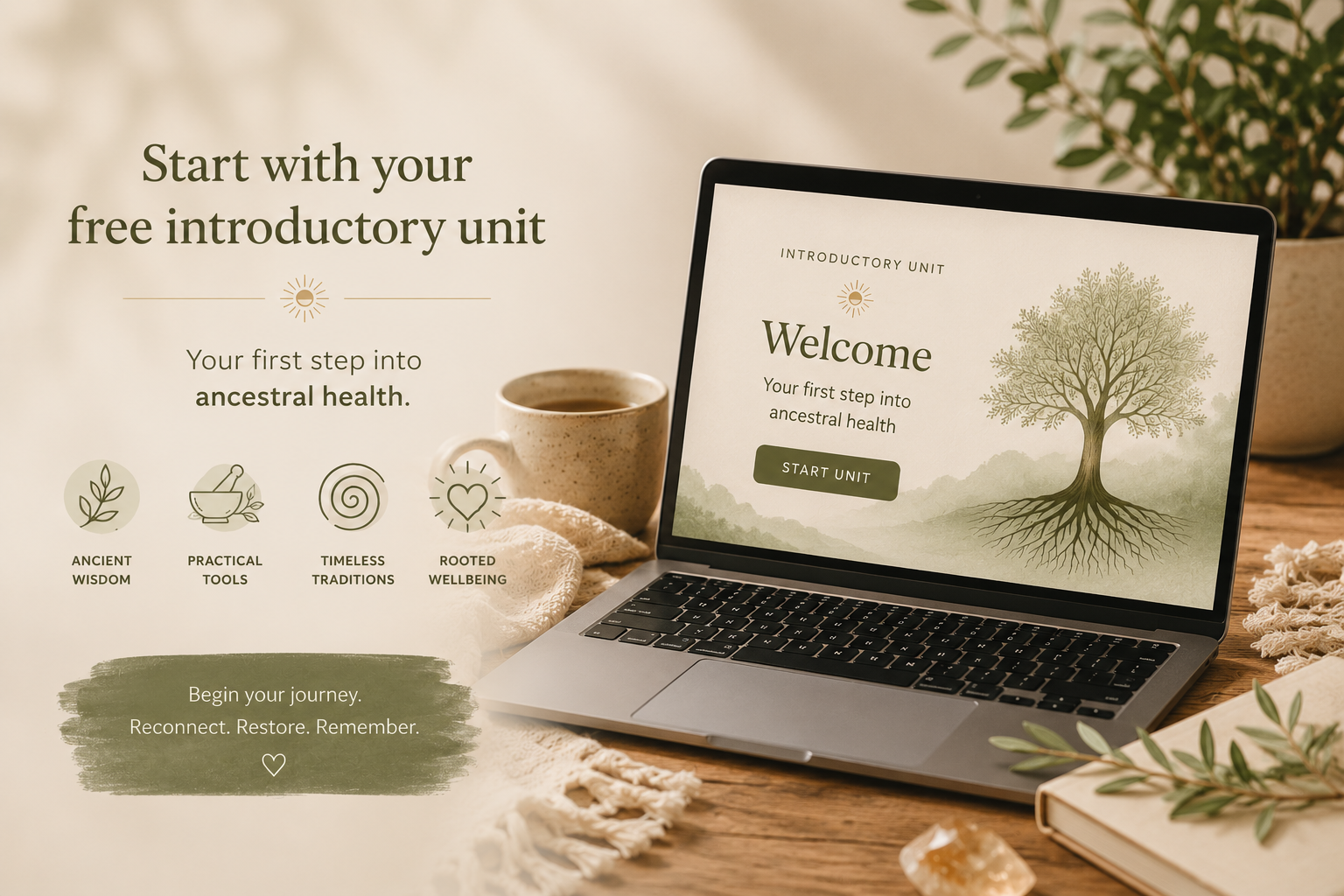
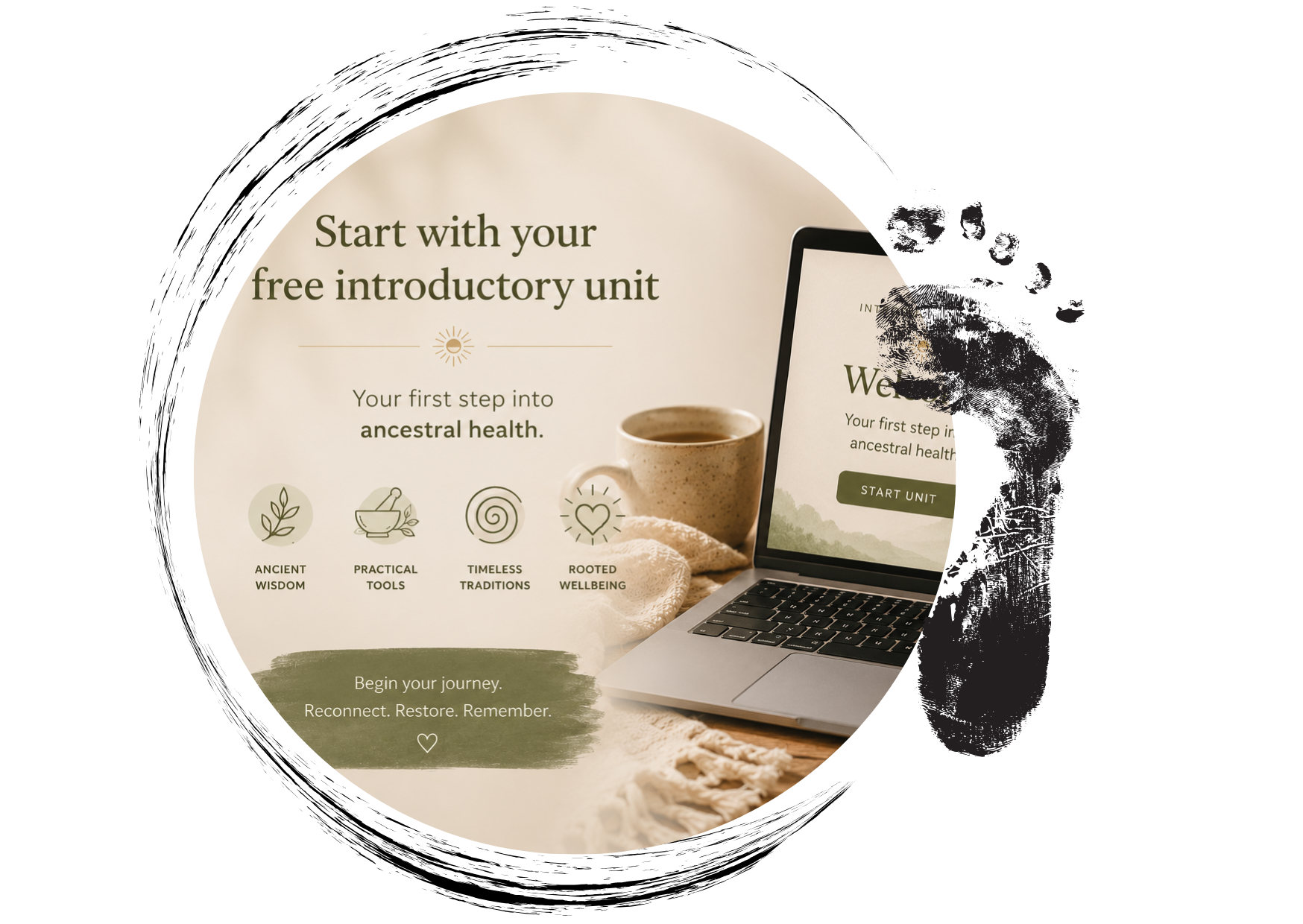
Start with the free introductory unit.
This short course introduces the Human Rehabilitation Project, the Ancestral Health framework, and the core ideas that underpin our teaching.
It is the best place to begin if you want to understand how the course works, who it is for, and whether this approach is a good fit for your clinical practice.
Free Case Study
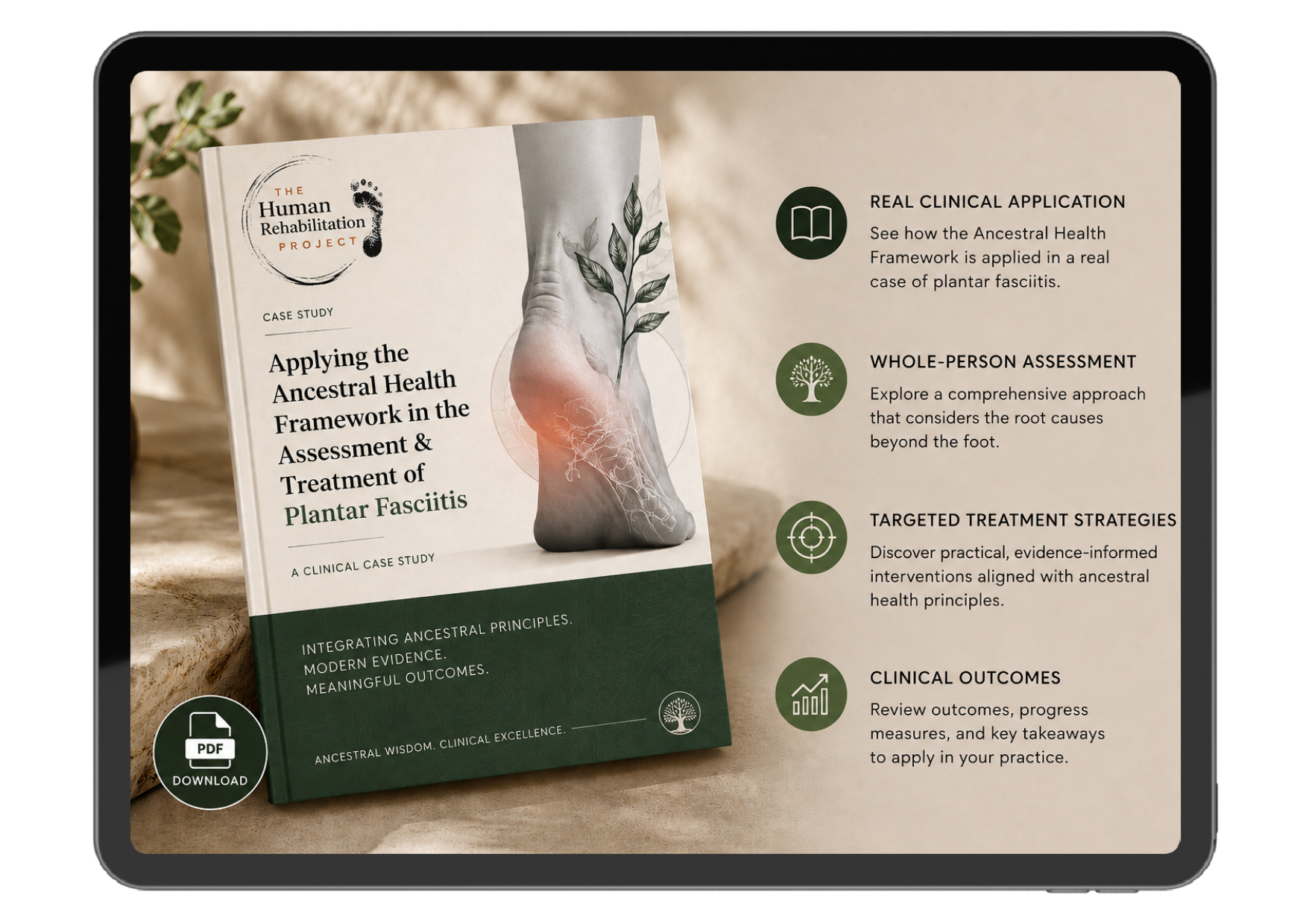
See how the Ancestral Health framework can be applied to a common clinical presentation.
This free case study demonstrates how to move beyond symptom-focused thinking and use a broader framework to assess contributing factors, evaluate interventions, and develop a practical rehabilitation plan.
Ready to Begin?
View the units within the Movement Module, or explore the free introductory unit first.
Do you have a specific question?